I Don’t Like the Way I Write, So I Did It Every Day for a Month
First off, I want to say thank you to all of the new subscribers from the last 3 days. I did not expect anything I wrote to take off the way Architecture for Sound: On Kevin Shields, SUNN O)))), and the Demands of Maximalism did, but I am grateful that it has an audience even if only for a short time. It started with an exercise to write about what I knew, and for the last two decades I’ve been an audio engineer of all stripes and I would approach this new frontier the same way I approach every other creative activity: by just doing it.
Writing didn’t always feel natural to me. I leaned on songwriting because it was contained: vulnerable, poetic, bitter or sweet or more bitter than sweet. I assumed I could transfer that into prose: write about what I knew, let my quirks and obsessions seep in through the margins, bury influences and lyrics so maybe you know what I’m hiding easter eggs. I made one simple promise: I would write every day, no matter how long or short. I’d write in the Notes app, where my thoughts are fast and unfiltered. I’d write in the mornings, when my creative energy is most apparent. I’d read more, because reading always sharpens knives in my brain. I was determined to write until I got annoyed, and then write a little more.
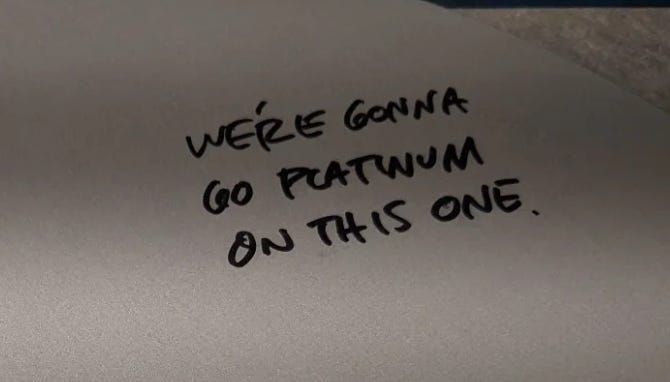
I approached writing like I approach production. I open a DAW. I pick an instrument. I compose a beat, choose a tempo, build a scaffold, and add the ear candy and transitions once the bones are stable. I hadn’t done long-form writing in years, but I leaned into that same scaffolding instinct and followed it where it led, even into subjects I’ll probably never publish.
And here’s the honest part: it wasn’t as hard as I expected.
Years of confronting self-doubt in the studio made it easier to quiet that same voice on the page. I’ve spent so much time pushing through panic, uncertainty, and the internal critic that I can access the part of my brain where the creativity just flows. I don’t worry about speed. I don’t worry about vulnerability. I just open the door and let the thoughts move. Each day opened something a little different, and the editing later was just icing and candles.
A few things I noticed along the way:
-
My speed increased the minute I stopped trying to force ideas.
-
My sentences became more economical when I stopped policing myself with grammar.
-
My metaphors arrived easier when I trusted my instincts and edited later.
-
My voice showed up more clearly when I wrote to the page instead of trying to prove something to nobody.
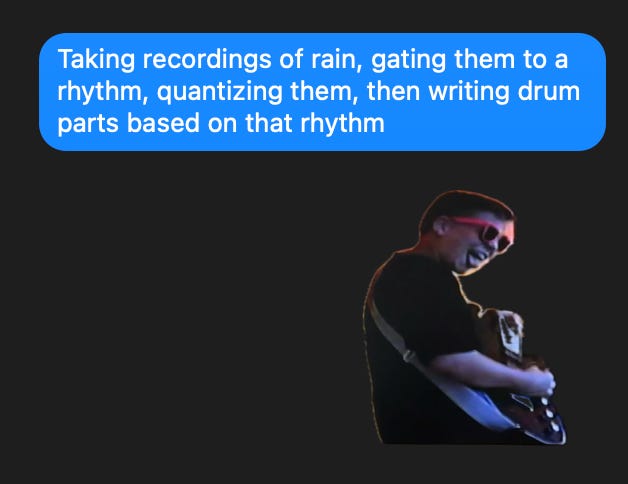
But the real breakthrough happened on a morning when I caught myself doing something familiar without thinking about it. I was looping a small, mundane sentence the way I loop a melodic fragment when I’m writing songs—repeating it, reshaping it, pushing it through tiny variations until it revealed something new. In songwriting, that repetition builds melody. On the page, it built meaning. That was the moment something clicked. I stopped trying to create writing and started trying to create movement. Once I had a tempo, the ideas started branching on their own. Treating prose like melody work changed everything.
That shift opened something deeper. Writing became less about output and more about listening. The quieter voice underneath began to surface—a voice I didn’t realize I’d hidden over the years. And the more I wrote, the more I realized how much of my life had been spent rearranging thoughts before they were even allowed to exist. Daily writing forced me to let them exist first. It made me curious again. It made me excited about things that had nothing to do with writing. It reminded me that ideas don’t always arrive fully formed; sometimes they show up as a beam of light or a smile on a dog.
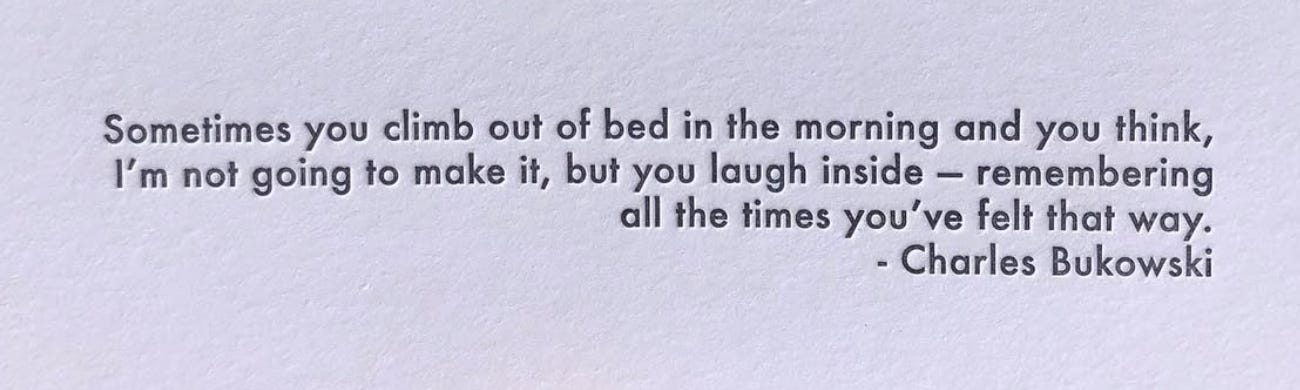
Across the month I wrote pieces I’ll never publish, fragments that will eventually grow into something larger, and a few pieces—like the Maximalism essay—that unexpectedly found their audience. Some days I wrote a single paragraph, but even that paragraph taught me how I think. Other days produced sentences that made no sense until a week later, when they suddenly did. Patterns emerged. Themes repeated. Certain ideas kept tugging at me. The work created its own direction long before I consciously chose one.
And when I try to sum up what I learned, it comes down to this:
Writing every day didn’t just make me a better writer.
It made me better at telling my truth, revealing the thoughts and feelings I keep inside.

The craft improved my speed, my clarity, my rhythm. But the deeper shift was internal. No more noise just words. I found a way to create something I could be proud of even on a small scale, just for me. Maybe I’ll never write something as inspired as the essay about My Bloody Valentine and Maximalist music. I promise I will still write about these ideas and my personal research, just as I promise I will always want to hear about yours as well.
So I’ll keep writing because I like what I found on the other side of this friction. I don’t know exactly where this leads, and I don’t need to. I just want to keep opening the door each morning and seeing what walks in. The month taught me that the writing shows up when I do, and that’s enough of a direction for now.
If you’re here reading this, thank you - especially if you don’t immediately unsub!
Thank you for reading! You can support me by becoming a paid subscriber
