A Working Engineers Honest Take on the New Steven Slate VSX Immersion Ones
A Little Background
If you’ve been following along, you know I’ve been using Steven Slate Audio’s VSX headphone system for a while now. The premise is compelling for anyone doing serious mixing work: a closed-back headphone system with software emulations of classic studios and speaker setups, designed to give you translation and reliability without needing to be in a treated room. Last year, me and my family moved into a new home, without a built out studio space like the one I was used to working in for the last 10 years - and I needed a proven solution for mixing on the road. I can say without a doubt, I am a fan of the platform and the work I’ve done with the headphones and software is some of my absolute best. When the pre-order was announced for the Immersion Ones, I was such a believer the investment was a no-brainer.
First Impressions of the IM1s
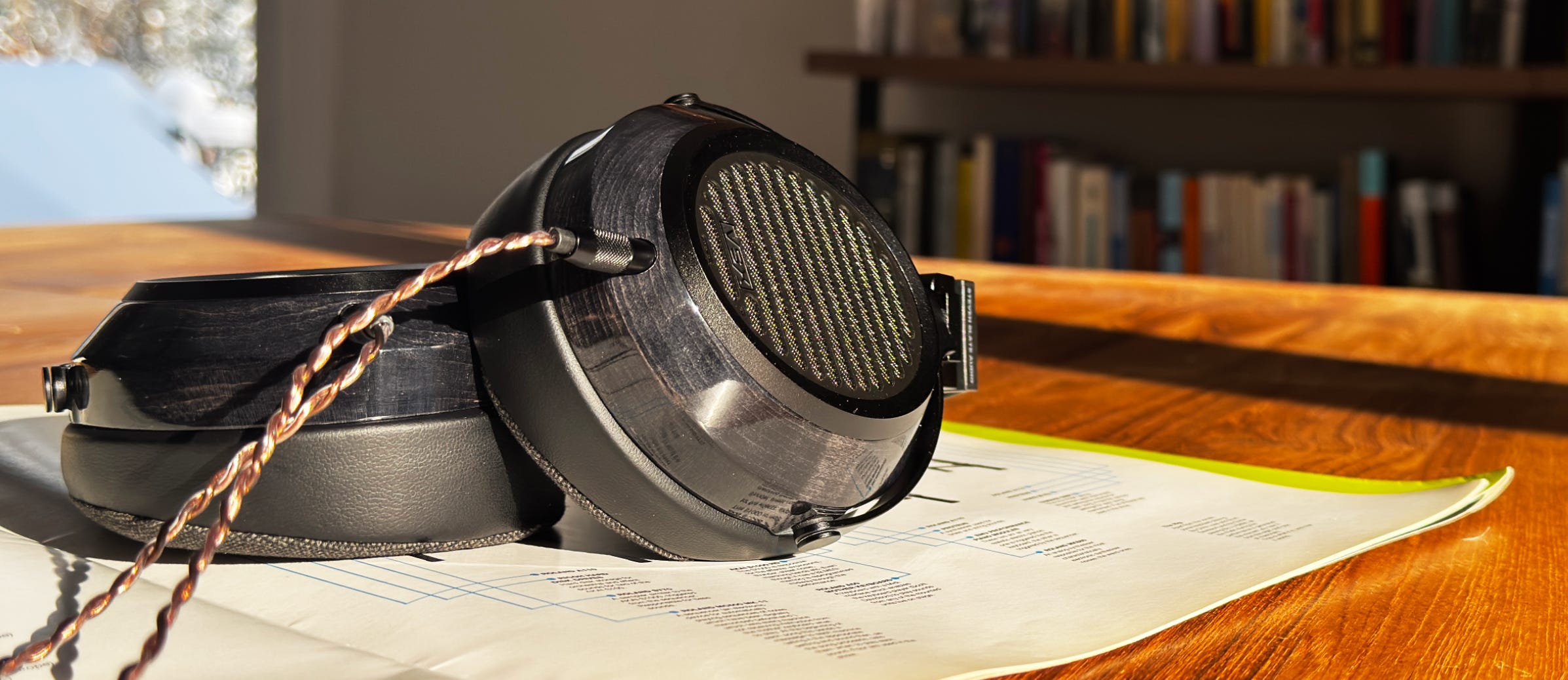
Out of the box, these things look and feel stunning. The build quality is immediately apparent and they feel premium in a way that makes you want to handle them carefully. These are my first pair of planar headphones. I wasn’t sure exactly what to expect other than they would be a bit faster on transients and a bit brighter than what I am used to.
I dropped them into my regular workflow, running them either out of my Apollo X4 or straight out of the MacBook Pro headphone jack. The Apollo headphone amp was just fine but I could tell something was holding them back. The emulations weren’t hitting the way I expected. They sounded great but at a very low volume. It was only then I realized maybe I had not prepared to use them out of the gate the way I hoped. Or even worse, maybe I made a mistake.
The Problem: Planar Magnetics Are Power Hungry
A little research cleared things up fast. Planar magnetic drivers are notoriously demanding. Unlike dynamic drivers, they need real, sustained current to open up and perform the way they’re designed to. The Apollo X4’s headphone out is perfectly capable for most headphones, but the IM1s were exposing its limits. The MacBook Pro headphone jack was nowhere near enough to drive them properly. It was clear and something I was really NOT looking forward to:
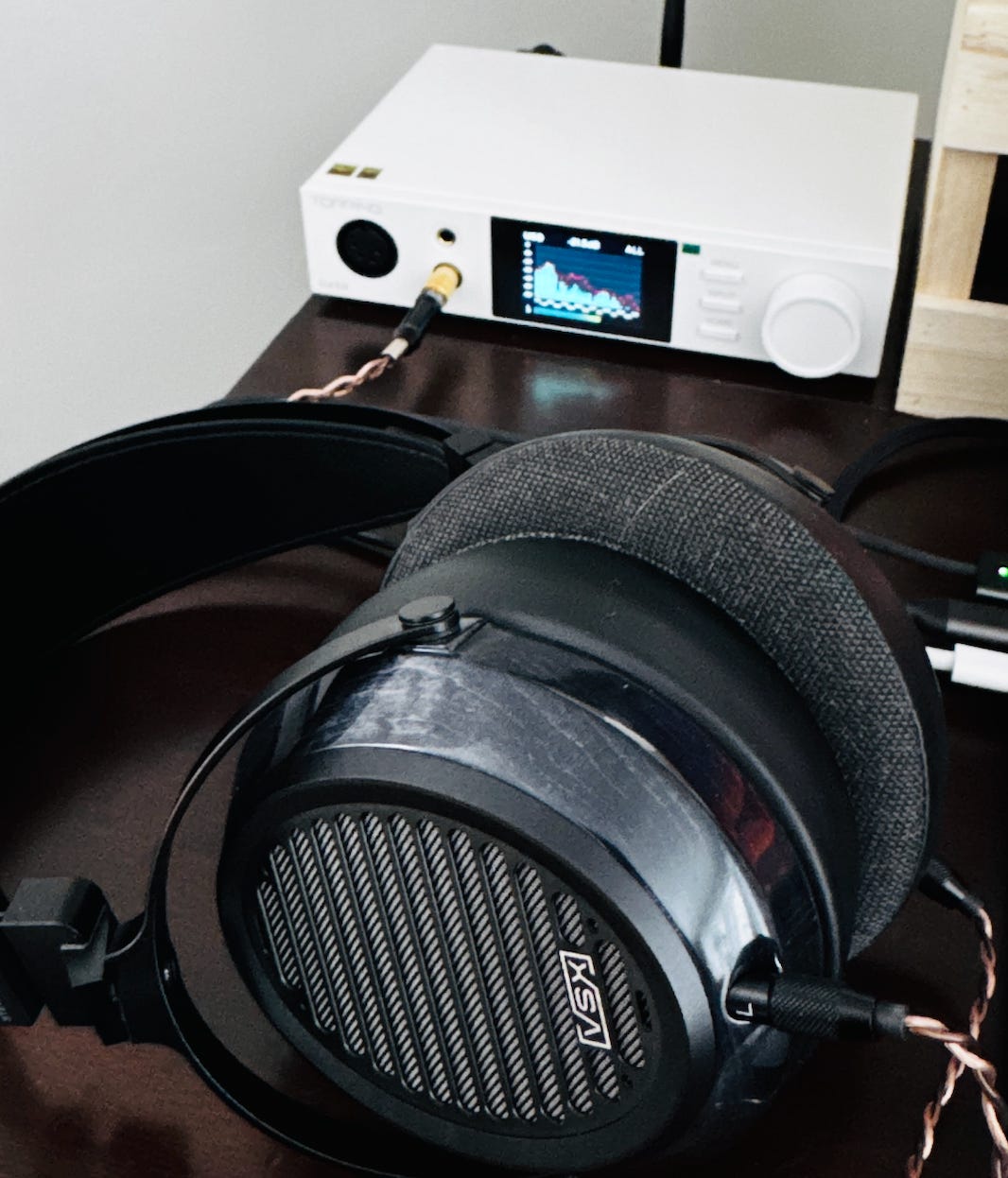
I needed a dedicated DAC/amp.
Enter the Topping DX5 II
After digging through forums and a few trusted recommendations, the Topping DX5 II (affiliate link) kept coming up as a strong value-to-performance option for planar headphones in this price range. Thankfully, there were units available near me. Within a day or so, it was on my desk. Reading about other peoples experiences and looking over a few YouTube videos, I found that it would be best if I used the unit as a DAC and Headphone Amp. What follows is my honest opinion based on mixing on headphones of many stripes over years and years. I plugged in the IM1s and started listening to lossless streams of some of my favorite records. At first on their own and then through VSX Systemwide. On their own, they are a very good set of headphones and listening to music with them is a rather nice experience. I tend to shy away from audiophile bullshit but I was enjoying what I was hearing even though it was a bit different than what I was used to. The Topping provided plenty of power on the high gain setting and the headset sounded great. For the price and what it has to offer, the DX5 II is probably the best DAC/Headphone Amp to pair with these headphones without going completely broke.
What Changed in the VSX Emulations
The two biggest improvements of the IM1s over the VSX closed-backs in terms of experience were exactly what had felt lacking before: low end and spatial depth. The emulations are built around the idea of putting you in a room: whether that’s a recording studio, a listening room, or a specific speaker setup; and with proper amplification, that illusion becomes much more convincing. The low frequencies had weight and definition. The sense of width and depth in the room emulations went from feeling like a pleasant effect to something that actually felt like a space. Not every space was audibly picture perfect, but the rooms and speaker emulations I used the most sounded fantastic.
Getting used to the IM1s took some time, and that's less a reflection of the headphones and more a reflection of just how different they are from the closed-backs sonically. My first few mix tests were solid but didn't quite reach the level I've come to expect from myself on the original VSX headset. That gap isn't a knock on the IM1s. It's the natural cost of switching to a fundamentally different tool. I got acclimated to the closed-backs in about a day. Two weeks in with the IM1s and I'm still finding new things, both in records I know inside and out and in my day to day work. I don't think that's a bad sign. If anything, it tells me there's more headphone here than I've fully unlocked yet.
Would I Trade Them for the Closed-Backs?
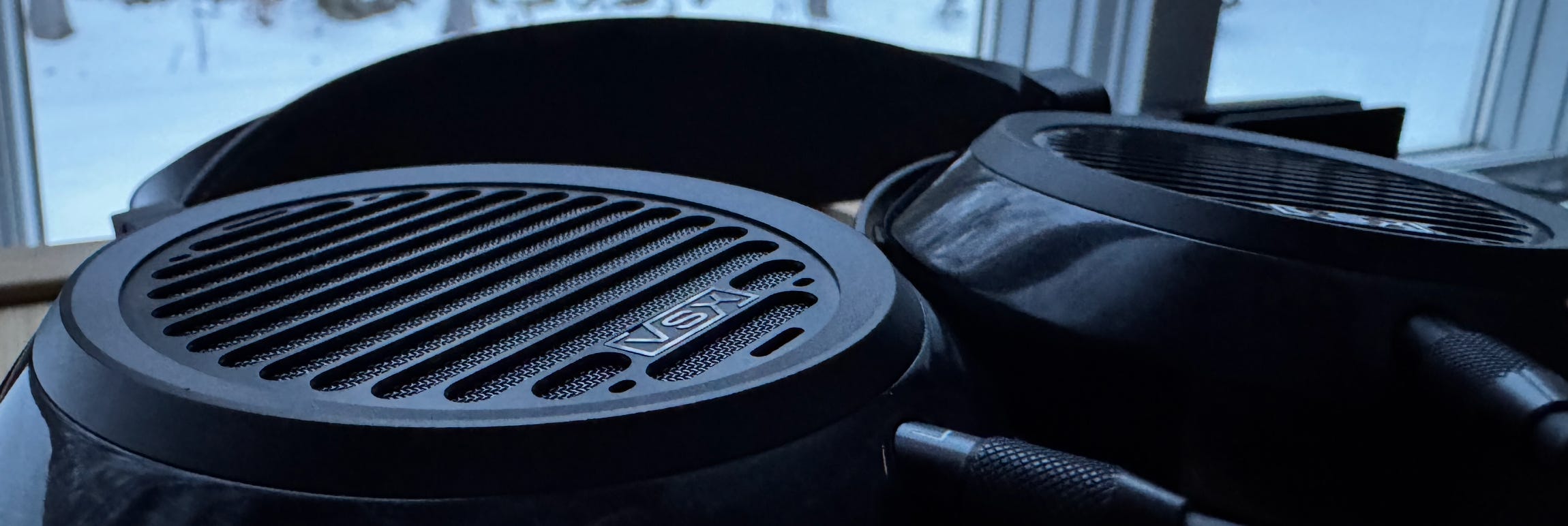
Short answer: no. But that comes with some nuance.
On paper, the IM1s win pretty handily. They’re more open, more detailed, and more convincing in the room emulations. The low end has more weight, the stereo field is wider, and the planar drivers bring a speed and clarity to transients that the closed-backs simply don’t have. If you’re comparing spec sheets and first impressions, it’s not much of a contest. The IM1s are FAST.
But I’m an audio engineer, not an audiophile and I am not looking for perfection. I’m looking for TRANSLATION. An audiophile is chasing a listening experience. I’m chasing accuracy and translation. I don’t need headphones that sound beautiful in some abstract sense. I need headphones that help me make better mixes that hold up on real systems. That’s the only benchmark that matters to me.
By that measure, the jury is still out. The IM1s are more lively in certain room emulations and the spatial depth is genuinely impressive. But “better sounding” and “better for my work” aren’t always the same thing, and right now I’m still in the process of calibrating. That’s not a criticism of the headphones. It’s just where I am two weeks in. A month from now I will have listened to and worked on enough music to have a better sense of how these are best fit into my workflow. Right now, I am still relying on the closed-backs for critical work and then checking that effort with the IM1s.
An Unexpected Bonus
One thing that is a really pleasant suprise is the Topping DX5 II handles every other headphone in my collection effortlessly. I’ve had a pair of Sennheiser HD 650s sitting around for years, and I’d been running them off a FiiO portable amp paired with my iPhone or MacBook through Qobuz and Apple Music Lossless. They sounded fine! Fun to listen to and all the benefits of high quality open backed headphones were there.
On the Topping? They sound like a completely different headphone. The HD 650s are famous for needing a proper amp to sing and while the headphone amps I have used in the past were probably just fine, the amount of power and options for crossfeed on the Topping have made my admin work (when I casually listen to music while I work on back office stuff) really pleasant.
The Topping was supposed to solve one problem. It solved some I didn’t know I had!
So Who Are the IM1s For?
If you’re already in the VSX ecosystem, the IM1s are not a casual upgrade. They’re a serious professional headphone and the planar drivers bring a level of detail and spatial realism to the emulations that the closed-backs can’t match. Pair them with proper amplification and they make a strong case for becoming your primary mixing tool.
For me, that case is still being made. I spent the last year building trust with the closed-backs every day: learning how they translate, how to read them, how to make decisions on them and know those decisions will hold up. That kind of trust doesn’t transfer automatically to a new headphone, even a better one. It's a little like mixing in a new room for the first time. You know the monitors are good, but you haven't learned how to read the space yet, and that reading is everything.
The closed-backs aren’t going anywhere. They are lightweight, work well with the MacBookPro headphone out, and I do almost all my remote music production with them. But my goal is to stop leaning on them as my primary for mixing and give the IM1s the chance to become the thing I trust. Two weeks in, everything I’m hearing tells me that’s a reasonable bet. I just have to keep listening.
